

A brighter smile can instantly boost confidence and improve overall appearance. Professional Teeth Whitening treatments are among the most popular cosmetic dental procedures today. However, achieving a whiter smile is only part of the journey. Proper teeth whitening aftercare plays a crucial role in maintaining results and preventing stains from returning too quickly.
Many people experience excellent whitening results initially but notice the brightness fading within weeks due to poor aftercare habits. By following the right post-treatment care routine, you can prolong your results and keep your smile looking fresh for much longer.
Why Teeth Whitening Aftercare Is Important
Teeth whitening aftercare refers to the habits and precautions you should follow after undergoing professional Teeth Whitening treatment. Immediately after whitening, teeth become slightly more porous and temporarily sensitive to staining substances.
During this period, pigments from food and beverages can easily penetrate the enamel and reduce the whitening effect.
Proper aftercare helps:
- Preserve whitening results longer
- Prevent new stains from forming
- Reduce tooth sensitivity
- Protect overall dental health
Following dentist-recommended guidelines can significantly extend the lifespan of your whitening treatment.
What Happens to Your Teeth After Whitening?
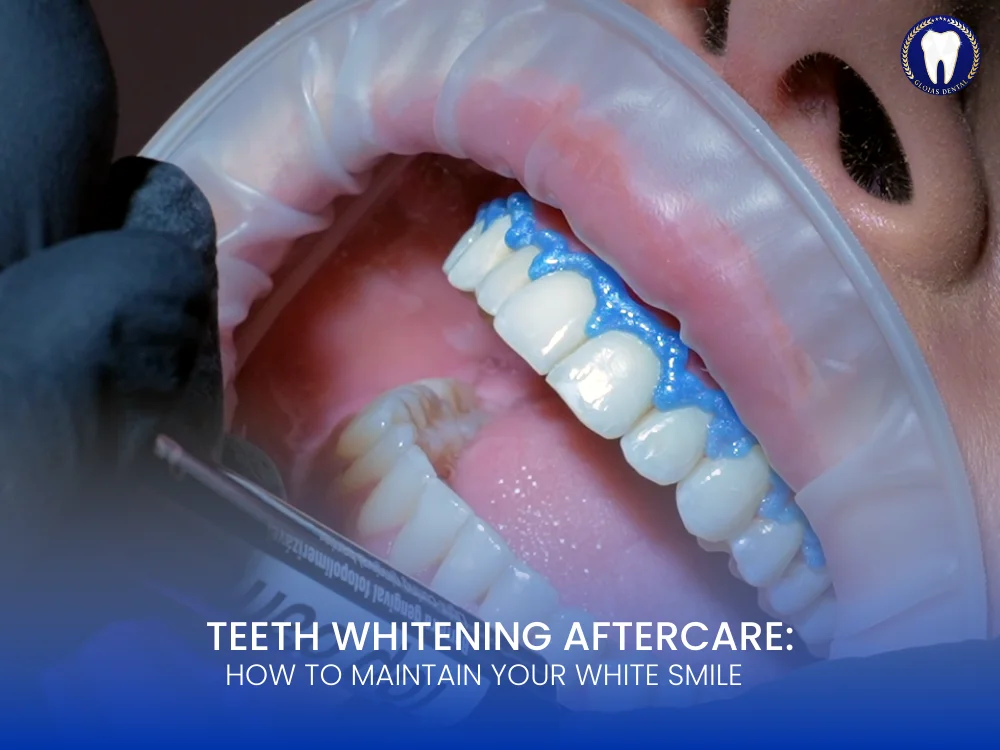
Professional whitening treatments usually involve bleaching agents such as Hydrogen Peroxide or Carbamide Peroxide.
These compounds penetrate the enamel and break down stain molecules through an oxidation process.
After the procedure:
- Tooth enamel becomes temporarily more porous
- Teeth may feel sensitive to hot or cold foods
- The surface can absorb pigments more easily
This is why dentists often recommend following a “white diet” for the first 24 to 48 hours.
The First 48 Hours: The Most Critical Period
The first two days after whitening are the most important for teeth whitening aftercare.
During this time, your enamel is still stabilizing and highly susceptible to stains.
To protect your results, avoid dark-colored foods and beverages such as:
- Coffee
- Tea
- Red wine
- Soy sauce
- Dark chocolate
- Berries
Instead, choose lighter foods such as:
- White rice
- Chicken
- Fish
- Potatoes
- Bananas
- Plain yogurt
This temporary diet helps prevent pigment absorption while your enamel recovers.
Foods and Drinks to Avoid After Teeth Whitening Aftercare
Certain foods are known to cause stains on teeth. Limiting them after whitening helps preserve your results.
Dark Beverages
Drinks like coffee, tea, and cola contain strong pigments called chromogens, which easily stain teeth.
Using a straw may help reduce contact with teeth.
Acidic Foods
Acidic foods can weaken enamel and make it more vulnerable to staining.
Examples include:
- Citrus fruits
- Vinegar-based sauces
- Carbonated drinks
Reducing acidic intake can support healthier enamel.
Highly Pigmented Foods
Some foods naturally contain strong coloring agents.
Examples include:
- Curry
- Tomato sauce
- Beetroot
- Soy sauce
These foods may quickly dull your whitening results if consumed too soon.
Maintain Good Oral Hygiene
Good oral hygiene is essential for maintaining a bright smile after whitening.
Dentists recommend brushing your teeth at least twice daily using a soft-bristled toothbrush and fluoride toothpaste.
Brushing helps remove plaque and surface stains before they accumulate.
Daily oral hygiene should include:
- Brushing twice daily
- Flossing once daily
- Using antibacterial mouthwash
Regular oral care helps maintain both the brightness and health of your teeth.
Manage Tooth Sensitivity After Whitening
Some patients experience temporary sensitivity after whitening procedures.
Sensitivity occurs because whitening agents penetrate the enamel and temporarily affect the inner dentin layer.
To reduce discomfort:
- Use toothpaste designed for sensitive teeth
- Avoid extremely hot or cold foods
- Use lukewarm water when brushing
Many dentists recommend toothpaste containing Potassium Nitrate, which helps calm nerve responses in sensitive teeth.
Fortunately, sensitivity typically subsides within a few days.
Quit Smoking for Longer Whitening Results
Smoking is one of the leading causes of tooth discoloration.
Nicotine and tar in tobacco products can quickly stain teeth yellow or brown.
Avoiding tobacco after whitening helps maintain your results much longer.
In addition to aesthetic benefits, quitting smoking also improves overall oral health and reduces the risk of Gum Disease.
Schedule Regular Dental Cleanings
Routine dental check-ups play an important role in maintaining your whitening results.
Professional cleanings performed by a **Dentist or dental hygienist help remove plaque, tartar, and surface stains.
Most dentists recommend professional cleaning every six months.
Regular cleanings can also help detect early dental problems before they become serious.
Consider Whitening Touch-Up Treatments
Even with proper teeth whitening aftercare, whitening results may gradually fade over time. This is completely normal, as everyday habits such as eating, drinking, and natural enamel aging can slowly cause stains to return.
To maintain a consistently bright smile, many patients choose to schedule whitening touch-up treatments every 6 to 12 months, depending on their lifestyle habits and how quickly their teeth tend to discolor. Individuals who frequently consume staining foods or beverages may benefit from more frequent touch-ups.
Several professional touch-up options are commonly recommended by dentists:
In-Clinic Whitening Sessions
A short in-clinic whitening session can quickly refresh your smile. Since the teeth have already been whitened before, touch-up treatments usually require less time and fewer applications compared to the initial procedure.
Dentist-Prescribed Whitening Trays
Custom-made whitening trays provided by a dentist allow patients to perform touch-up treatments conveniently at home. These trays are designed to fit your teeth precisely, ensuring even application of the whitening gel while minimizing gum irritation.
Professional-Grade Whitening Gels
Dentists may also recommend professional-strength whitening gels that are stronger and more effective than over-the-counter products. These gels can be used with custom trays or specific home whitening systems to maintain brightness safely.
Touch-up treatments are a simple and effective way to preserve the results of your original whitening procedure. Instead of repeating the full whitening process, periodic maintenance helps keep your teeth looking naturally bright and healthy for a longer period.
Lifestyle Habits That Protect Your White Smile
Long-term whitening results depend largely on daily habits.
Here are several lifestyle tips that can help keep your teeth bright:
Drink Water Frequently
Water helps rinse away food particles and pigments after meals.
Drinking water after coffee or tea may reduce staining.
Eat Crunchy Fruits and Vegetables
Foods like apples, carrots, and celery help naturally clean teeth while chewing.
They stimulate saliva production, which helps neutralize acids in the mouth.
Use a Straw for Dark Drinks
Using a straw can reduce direct contact between dark beverages and your teeth.
This simple habit may help minimize staining over time.
How Long Do Teeth Whitening Results Last?
Results from professional teeth whitening aftercare can last anywhere from six months to two years, depending largely on an individual’s lifestyle habits and oral care routine. While the whitening treatment removes stains and brightens the enamel effectively, maintaining the results requires proper care after the procedure.
Several factors can influence how long your whitening results last:
Diet
Foods and beverages that contain strong pigments can gradually stain the teeth again. Drinks like coffee, tea, red wine, and cola are common culprits. Dark-colored foods such as soy sauce, berries, and curry may also contribute to discoloration over time.
Smoking Habits
Smoking or using tobacco products can significantly shorten the longevity of whitening results. Nicotine and tar easily adhere to the enamel, causing yellow or brown stains to return faster.
Oral Hygiene Routine
Maintaining good oral hygiene is essential. Brushing at least twice daily, flossing regularly, and using dentist-recommended whitening toothpaste can help prevent new stains from building up on the teeth.
Frequency of Dental Cleanings
Regular professional cleanings at the dental clinic help remove surface stains and plaque before they become permanent. Many dentists recommend scheduling a dental cleaning every six months to keep teeth looking bright.
FAQs About Teeth Whitening Aftercare
1. How long should I follow teeth whitening aftercare?
The most critical period is the first 48 hours, but maintaining good habits afterward helps prolong results.
2. Can I drink coffee after teeth whitening?
It is best to avoid coffee for at least 48 hours after whitening to prevent staining.
3. Why are my teeth sensitive after whitening?
Sensitivity occurs because whitening agents temporarily affect the enamel and dentin layers.
4. How can I reduce whitening sensitivity?
Using toothpaste containing Potassium Nitrate and avoiding extreme temperatures can help reduce sensitivity.
5. Can I brush my teeth immediately after whitening?
Yes, but use a gentle toothbrush and avoid abrasive toothpaste.
6. Does smoking affect teeth whitening aftercare results?
Yes, tobacco products can quickly stain teeth and reduce the longevity of whitening results.
7. How often should I get teeth whitening aftercare touch-ups?
Many patients benefit from touch-ups every 6 to 12 months, depending on their habits.
8. Are whitening results permanent?
No, whitening results gradually fade over time due to diet and lifestyle factors.
9. Can mouthwash stain teeth?
Some mouthwashes with strong coloring agents may contribute to staining if used excessively.
10. Is professional whitening better than home kits?
Professional treatments performed by a **Dentist usually provide faster and more noticeable results.
Conclusion
A brighter smile can significantly enhance your confidence, but maintaining it requires consistent care. Following proper teeth whitening aftercare helps protect your investment and prolong the results of your whitening treatment.
By avoiding staining foods, maintaining excellent oral hygiene, and scheduling regular dental check-ups, you can enjoy a whiter smile for months or even years. If you notice your teeth gradually losing brightness, professional touch-up treatments can help restore your smile quickly and safely.
Taking care of your teeth today ensures that your bright smile continues to shine in the future.