
Braces vs Invisalign: Understanding the Key Differences
When comparing braces vs Invisalign, the goal is the same—straightening teeth and improving your bite—but the methods differ significantly. In Orthodontics, both options are widely used to treat alignment issues, yet each comes with its own advantages, limitations, and lifestyle considerations. Understanding these differences can help you choose the most suitable treatment for your needs.
What Are Traditional Braces?
Traditional braces use a system of brackets and wires to gradually move teeth into alignment.
Key Components:
- Brackets bonded to teeth
- Archwires that apply pressure
- Elastic bands for bite correction
Braces are highly effective for treating complex cases, including severe crowding and bite issues like Malocclusion.
What Is Invisalign?
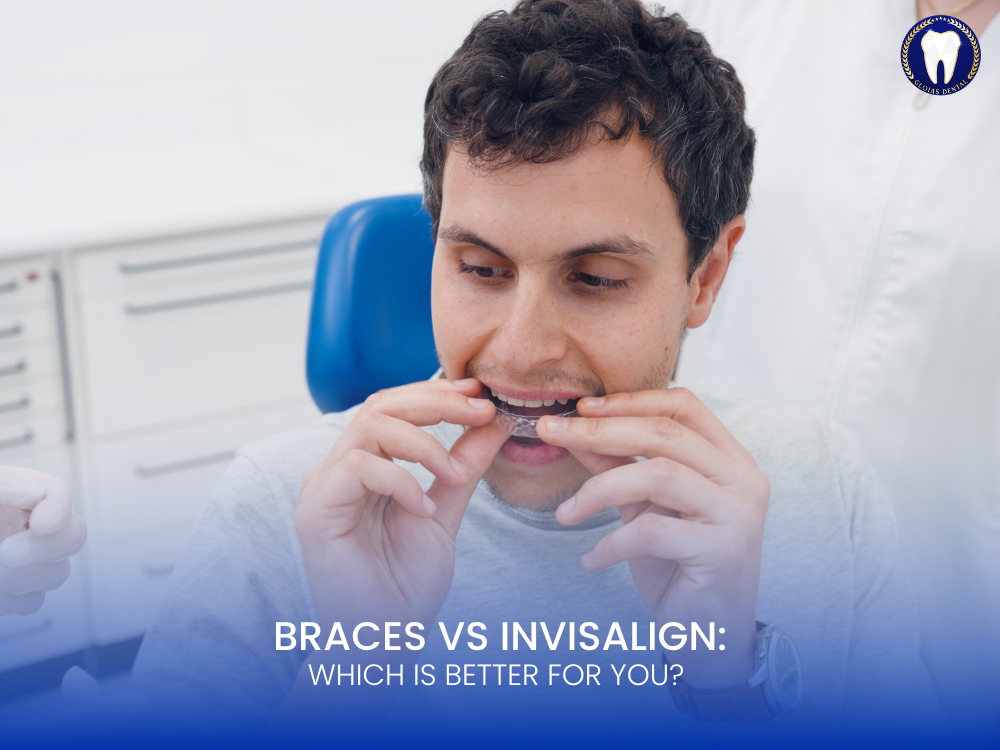
Invisalign is a system of clear, removable aligners custom-made to fit your teeth.
How It Works:
- A series of aligners gradually shift teeth
- Each set is worn for 1–2 weeks
- Aligners must be worn 20–22 hours daily
This option is popular for its discreet appearance and convenience.
Braces vs Invisalign: Side-by-Side Comparison
Feature | Braces | Invisalign |
Visibility | Visible | Nearly invisible |
Removability | Fixed | Removable |
Comfort | May cause irritation | Generally more comfortable |
Effectiveness | Best for complex cases | Best for mild to moderate cases |
Maintenance | Requires careful cleaning | Easier oral hygiene |
Discipline Required | Lower | Higher (must wear consistently) |
Braces vs Invisalign Effectiveness: Which Works Better?
Braces
Braces are often considered the gold standard for:
- Severe crowding
- Complex bite issues
- Rotated or impacted teeth
Because they are fixed, they work continuously without relying on patient compliance.
Invisalign
Invisalign is effective for:
- Mild to moderate alignment issues
- Minor spacing problems
However, success depends heavily on patient discipline—aligners must be worn as instructed.
Comfort and Convenience: Braces vs Invisalign
Braces
- May cause irritation to cheeks and lips
- Food restrictions are necessary
- Adjustments can cause temporary discomfort
Invisalign
- Smooth plastic aligners reduce irritation
- No major food restrictions
- Can be removed for eating and brushing
This makes Invisalign a more convenient option for many adults.
Treatment Time: Braces vs Invisalign
Treatment duration varies for both options.
Braces:
- Typically 12–24 months
Invisalign:
- Around 6–18 months for mild to moderate cases
However, complex cases may take similar time with either method.
Aesthetics: Which Looks Better?
For many patients, appearance is a key factor.
- Braces are visible, though ceramic options are less noticeable
- Invisalign aligners are nearly invisible
This makes Invisalign especially appealing for professionals and adults.
Braces vs Invisalign Cost Comparison in Malaysia
Costs can vary depending on the complexity of the case and clinic.
Braces:
- RM 5,000 – RM 12,000
Invisalign:
- RM 10,000 – RM 20,000+
While Invisalign is generally more expensive, some patients consider the aesthetic and convenience benefits worth the investment.
Maintenance and Oral Hygiene
Braces
Maintaining oral hygiene with braces requires extra care and consistency, as food particles and plaque can easily get trapped around brackets and wires.
Key considerations:
- Brushing after every meal
Food can lodge around brackets, increasing the risk of plaque buildup. Brushing thoroughly after eating helps prevent staining and decay. - Using special flossing tools
Traditional flossing is more challenging, so tools like floss threaders or interdental brushes are often recommended to clean between teeth and under wires. - Avoiding certain foods
Hard, sticky, or chewy foods (like nuts, caramel, and chewing gum) can damage brackets or get stuck, making cleaning more difficult. - Higher risk of plaque accumulation
If not cleaned properly, braces can increase the chances of cavities, gum inflammation, and white spot lesions (early signs of enamel damage).
👉 Bottom line: Braces demand a more disciplined and detailed oral hygiene routine to keep teeth and gums healthy throughout treatment.
Invisalign
Oral hygiene with Invisalign is generally simpler and more convenient, making it easier for many patients to maintain healthy teeth and gums.
Key advantages:
- Remove aligners to brush and floss normally
Since aligners are removable, you can maintain your usual oral care routine without working around wires or brackets. - Clean aligners separately
Aligners should be rinsed and gently brushed (or cleaned with special solutions) to prevent bacteria buildup and odor. - No food restrictions
You remove aligners before eating, so there’s less risk of food getting trapped or damaging the appliance. - Lower risk of plaque buildup
With proper habits, Invisalign can reduce the likelihood of plaque accumulation and cavities compared to fixed braces.
👉 Bottom line: Invisalign offers a more hygiene-friendly option, but it still requires responsibility—especially cleaning both your teeth and aligners consistently.
Braces vs Invisalign Lifestyle Considerations
Braces
Braces are a fixed orthodontic solution, which means they stay on your teeth throughout the entire treatment—this has a direct impact on your daily habits.
What to expect:
- Not removable
Braces are always in place, so you don’t have to think about taking them out or remembering to wear them—but you also can’t remove them for special occasions. - Dietary restrictions apply
Certain foods like hard snacks, sticky sweets, and chewy items should be avoided to prevent damage to brackets and wires. - Less flexibility in daily life
Eating out, snacking, and even oral care routines require more planning and caution. - Adaptation period
You may need time to adjust to speaking, eating, and general comfort—especially after adjustments.
👉 Best for: People who prefer a “set-and-forget” approach and don’t want to rely on daily discipline.
Invisalign
Invisalign offers a more flexible and lifestyle-friendly experience, making it popular among busy individuals and those who value convenience.
What to expect:
- Removable for meals and events
You can take aligners out when eating, drinking (except water), or attending important occasions—no food restrictions required. - More lifestyle freedom
Ideal for social settings, professional environments, or active lifestyles where appearance and convenience matter. - Easier to maintain normal habits
Brushing, flossing, and eating feel more natural since there are no fixed appliances in the way. - Requires strong discipline
Aligners must be worn 20–22 hours daily. Skipping wear time can delay results or affect effectiveness.
👉 Best for: Individuals who want flexibility and aesthetics—and can stay consistent with wear.
Who Should Choose Braces?
Braces remain one of the most reliable and versatile orthodontic treatments, especially for patients who need precise and comprehensive correction.
Braces may be the better choice if you:
- Have complex orthodontic issues
Braces are highly effective for severe crowding, significant bite problems (overbite, underbite, crossbite), and rotated teeth that require controlled movement. - Need maximum precision and control
Orthodontists can adjust braces in detail over time, making them ideal for cases that require step-by-step corrections. - Prefer a fixed, non-removable solution
Since braces are bonded to your teeth, you don’t need to worry about removing or misplacing them. - May struggle with compliance
If wearing removable aligners for 20–22 hours daily seems challenging, braces eliminate that concern. - Are younger patients (teens)
Braces are often recommended for teenagers who may not consistently follow aligner guidelines.
Who Should Choose Invisalign?
Invisalign offers a modern, discreet alternative to traditional braces, appealing to patients who prioritize aesthetics and flexibility.
Invisalign may be ideal if you:
- Have mild to moderate alignment issues
It works well for spacing, minor crowding, and less complex bite adjustments. - Want a nearly invisible treatment
The clear aligners are difficult to notice, making them popular among working adults and image-conscious individuals. - Prefer flexibility in daily life
Aligners can be removed when eating, brushing, or attending special events—no food restrictions required. - Can commit to consistent wear
Success depends on wearing aligners 20–22 hours per day, so discipline is essential. - Value comfort
Smooth plastic trays tend to cause less irritation compared to metal brackets and wires.
Braces vs Invisalign Pros and Cons Summary
Braces Pros:
- Highly effective
- Suitable for all cases
- No compliance issues
Braces Cons:
- Visible
- Dietary restrictions
- More difficult cleaning
Invisalign Pros:
- Nearly invisible
- Removable
- Comfortable
Invisalign Cons:
- Requires discipline
- Not ideal for severe cases
- Higher cost
Final Thoughts: Braces vs Invisalign
When it comes to braces vs Invisalign, there is no universal “best” option. The right choice depends on your dental needs, lifestyle, and personal preferences.
Braces offer reliability and effectiveness for complex cases, while Invisalign provides a discreet and flexible alternative for suitable candidates.
Consulting an experienced orthodontist is the best way to determine which treatment aligns with your goals.
FAQs: Braces vs Invisalign
1. Is Invisalign better than braces?
It depends on your case. Invisalign is great for mild to moderate issues, while braces handle complex cases better.
2. Which is faster: braces or Invisalign?
Invisalign may be faster for simple cases, but timelines are similar for complex treatments.
3. Are braces more painful than Invisalign?
Braces may cause more irritation, especially after adjustments.
4. Can Invisalign fix severe misalignment?
It may not be suitable for very complex cases.
5. Are braces cheaper than Invisalign?
Yes, braces are generally more affordable.
6. Do Invisalign aligners affect speech?
There may be a slight adjustment period, but speech usually returns to normal quickly.
7. Can I eat anything with Invisalign?
Yes, since aligners are removed during meals.
8. Do braces work better for teenagers?
Braces are often preferred for teens due to lower reliance on compliance.
9. How often do I need check-ups?
Typically every 4–8 weeks for both options.
10. Will results be permanent?
Results can last long-term with proper retainer use.