
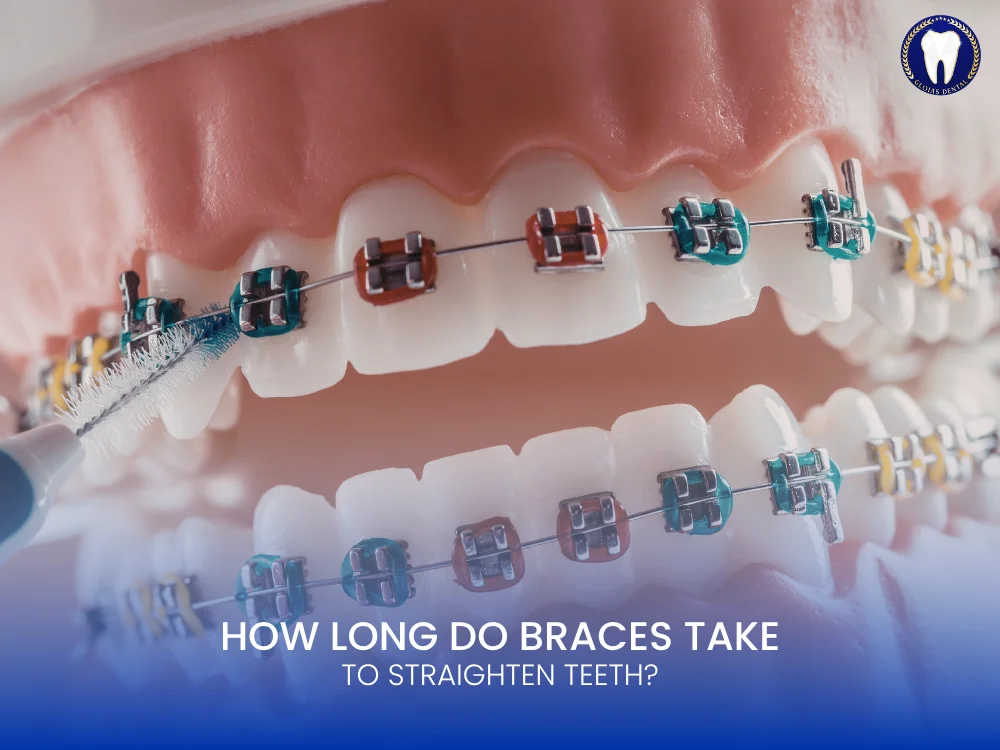
How Long Do Braces Take? The average duration for braces treatment is typically 12 to 24 months. However, the exact timeline depends heavily on the complexity of your orthodontic issues, the type of braces you choose, your age, and how strictly you follow your orthodontist’s instructions throughout the process.
The Average Timeline for Braces Treatment
While the standard timeline falls between one and two years, orthodontic treatment is never a one-size-fits-all journey. Your teeth are being anchored through bone, a biological process that requires steady, safe pressure to ensure long-term stability without damaging the roots.
According to guidelines from the American Association of Orthodontists (AAO), regular monitoring ensures this movement happens efficiently. Some patients achieve their dream smile in just under a year, while others with complex skeletal discrepancies might require up to three years of active treatment.
Braces Duration Based on the Complexity of Your Teeth
The structural starting point of your smile is the biggest predictor of how long you will need to wear braces.
Mild Crowding or Spacing (6 to 12 Months)
If you only have minor cosmetic issues, such as slight overlapping or small gaps between your teeth, your treatment will be relatively fast. These minor adjustments focus primarily on shifting the crowns of the teeth rather than altering the entire jaw structure.
Moderate Orthodontic Issues (12 to 24 Months)
This is the most common timeline for patients. It addresses moderate crowding, more pronounced gaps, and mild bite misalignments like a slight overbite or underbite. Treatment during this phase involves leveling, aligning, and beginning the process of correcting how your upper and lower teeth meet.
Severe Misalignment or Bite Issues (24 to 36+ Months)
Complex cases involve severe crowding, impacted teeth, or significant jaw discrepancies like deep bites, crossbites, and open bites. These corrections often require complex mechanics, tooth extractions, or temporary anchorage devices (TADs) to safely move the teeth into their correct positions.
How the Type of Braces Affects Treatment Time
Modern orthodontics offers several appliance options, each with its own mechanics and aesthetic profiles.
| Type of Braces | Average Treatment Duration | Best Suited For |
| Traditional Metal | 12 to 24 Months | All cases, especially severe misalignments |
| Ceramic Braces | 18 to 24 Months | Mild to moderate aesthetic corrections |
| Self-Ligating | 12 to 20 Months | Patients seeking fewer adjustment visits |
| Clear Aligners | 6 to 18 Months | Mild to moderate compliance-driven cases |
Traditional Metal Braces
Standard stainless steel brackets remain the gold standard for efficiency. They give orthodontists precise, rigid control over root movement, making them highly effective for severe cases and complex bite corrections.
Ceramic Braces
Made of clear or tooth-colored materials, ceramic braces offer a discreet look. However, because ceramic creates more friction against the archwire than metal, and because the brackets are slightly more fragile, treatment can sometimes take a few months longer.
Self-Ligating Braces
These braces use a specialized clip instead of rubber bands to hold the archwire in place. This design reduces friction, allowing teeth to slide more freely. Clinical insights suggest they can occasionally shorten treatment time and reduce the number of necessary office visits.
Clear Aligners
Removable clear trays, such as Invisalign, are highly efficient for mild to moderate tracking issues. Because they are pre-programmed using advanced 3D digital software, they can isolate specific tooth movements rapidly—provided they are worn for the required 22 hours a day.
Key Factors That Influence Your Braces Timeline
Your personalized orthodontic roadmap is shaped by several intersecting biological and behavioral factors.
Age and Jaw Development
Children and teenagers generally experience faster treatment times because their jawbones are still growing and are more malleable. Adults can achieve the exact same high-quality results, but the process may take slightly longer because mature bone density offers more resistance to tooth movement.
Patient Compliance and Following Orthodontist Instructions
For those using clear aligners or wearing elastics (rubber bands) with traditional braces, compliance is everything. Failing to wear your elastics as prescribed stops your bite correction entirely, adding months to your overall timeline.
Keeping Regular Adjustment Appointments
Braces work through a series of planned adjustments. Missing your appointment means your archwire loses its active force, leaving your teeth at a standstill until your next visit.
Biological Factors and How Fast Teeth Move
Every individual’s bone remodeling rate is genetically unique. Some patients possess a faster cellular response to orthodontic pressure, allowing their bone to dissolve and rebuild around the shifting tooth faster than others.
Specialist Insight
Clinical Experience: At GLOJAS Dental Clinic, the patients who complete their orthodontic treatment the fastest are not necessarily those with the easiest cases, but those with excellent oral hygiene. Clean teeth and healthy gums allow for smooth, continuous tooth movement, whereas underlying inflammation acts as a biological roadblock.
What Can Delay Your Braces Progress?
Avoiding common pitfalls is the best way to ensure your braces come off right on schedule.
Broken Brackets or Wires
Eating hard, sticky, or crunchy foods can break the bond between the bracket and your tooth. A broken bracket stops moving that specific tooth completely, and can even allow it to drift backward into its old position.
Poor Oral Hygiene and Gum Issues
When plaque builds up around brackets, it can trigger gingivitis or periodontal disease. According to the British Orthodontic Society (BOS), if gum disease develops during treatment, all movement must be paused or the braces removed entirely to prevent permanent bone loss.
Missing Scheduled Appointments
Your orthodontic wires are engineered to exert a specific amount of force over a set period. Once that force is spent, no further progress occurs. Skipping appointments directly extends your time in the orthodontic chair.
Frequently Asked Questions About Braces Duration
What is the absolute shortest time you can wear braces?
The absolute shortest time for braces is typically 6 months. This accelerated timeline is generally limited to minor cosmetic adjustments of the front teeth, using short-term orthodontic systems, without correcting the underlying bite.
How long do braces take for crowded teeth?
For mild to moderate crowding, braces take about 12 to 18 months. Severe crowding, especially cases requiring the extraction of premolars to create space in the jaw, can take 24 to 30 months.
When will I start seeing visible results?
Most patients begin to notice visible changes in their tooth alignment within 4 to 6 weeks of their first fitting. Significant shifts in overall alignment are usually obvious by the third month.
Does getting braces hurt?
You will experience mild soreness and pressure for 3 to 5 days after initial placement and after subsequent wire adjustments. This discomfort is easily managed with over-the-counter pain relievers and a soft-food diet.
How long do I need to wear a retainer after braces?
You must wear a retainer indefinitely to maintain your results. Typically, this means full-time wear for the first 6 months, followed by lifetime night-time wear to prevent natural age-related teeth shifting.
Get RM2,000 Off Invisalign Cost At GLOJAS Dental Clinic

Ready to transform your smile? Book your consultation with Dr. Aaron Ng at GLOJAS Dental Clinic in Desa Sri Hartamas, Kuala Lumpur, and enjoy an exclusive RM 2,000 rebate on your Invisalign treatment.
Expert Care: Dr. Aaron Ng is a certified Invisalign provider specializing in customized, gentle smile transformations.
Advanced Tech: See your future smile in 3D using our advanced intraoral scanners before you even begin.
Flexible Payments: Easy 0% installment plans are available to fit your monthly budget.
[Click Here to Book Your Consultation & Claim Your RM2,000 Rebate]