
Losing a tooth—whether due to trauma, decay, or extraction—can feel disheartening. But don’t worry, replacing a missing tooth doesn’t have to be complicated or costly. Whether you’re aiming to regain your confident smile or restore chewing function, a single false tooth could be the ideal solution.
From removable options to permanent fixes, modern dentistry offers a variety of effective methods for replacing one missing tooth. In this article, we’ll walk you through the top single false tooth options, their pros and cons, pricing, and how to care for your replacement tooth to ensure long-lasting results.
What Is a Single False Tooth?
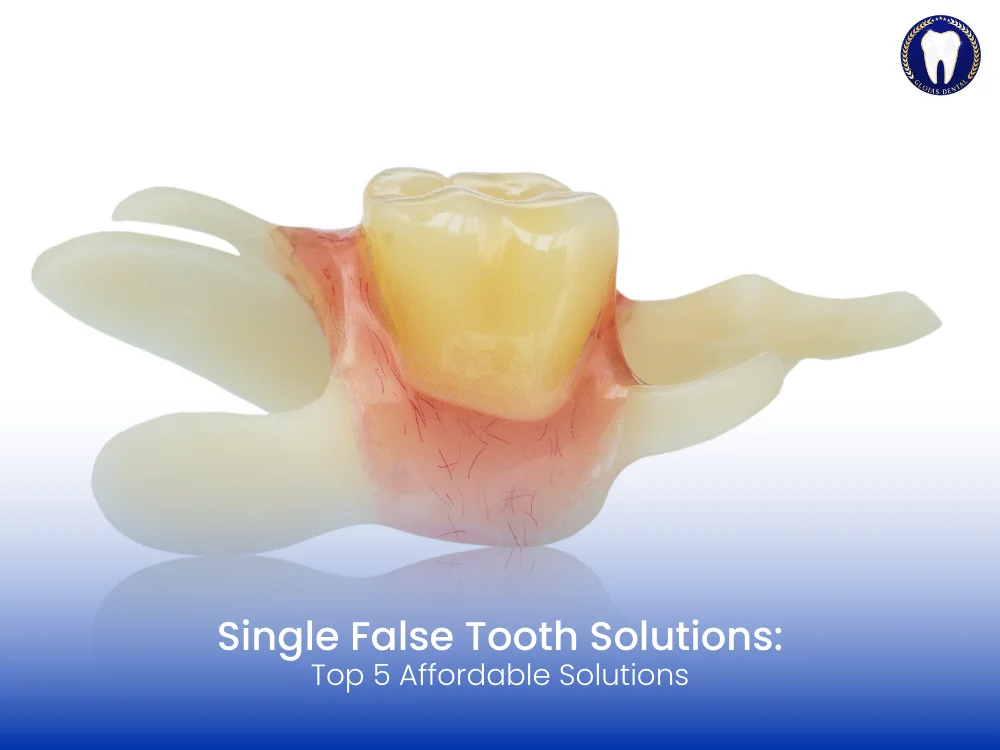
A single false tooth, also known as a dental prosthetic or tooth replacement, is designed to fill the gap left by a missing natural tooth. It restores function, prevents teeth from shifting, and improves aesthetics.
Unlike full dentures, which replace all teeth in an arch, a single false tooth is used when only one tooth is missing. Depending on your preferences, budget, and oral health, there are various solutions to choose from.
Top 5 Single False Tooth Replacement Options
Dental Implant: The Premium Solution
A dental implant is considered the gold standard for replacing a single missing tooth. It involves surgically placing a titanium post into the jawbone, which acts as a root. A crown is then attached to replicate the look and function of a natural tooth.
Pros:
- Permanent and durable
- Looks and feels like a natural tooth
- Stimulates jawbone to prevent bone loss
Cons:
- Higher cost
- Requires minor surgery
- Longer healing time (3–6 months)
Cost Estimate: $3,000–$5,000
Dental Bridge: A Fixed but Less Invasive Option
If you’re not a candidate for implants or prefer a non-surgical solution, a dental bridge may be ideal. A bridge uses adjacent teeth as anchors and places a false tooth (pontic) in the middle to “bridge” the gap.
Pros:
- No surgery required
- Faster than implants
- Blends well with natural teeth
Cons:
- Requires shaping of neighboring teeth
- May not last as long as an implant
Cost Estimate: $2,000–$4,000
Removable Partial Denture: Budget-Friendly Option
A removable partial denture is one of the most affordable ways to replace a single tooth. It consists of a plastic or metal framework with a single false tooth and clasps to hold it in place.
Pros:
- Economical
- Non-invasive
- Quick to fabricate
Cons:
- Less stable than permanent options
- Needs to be removed for cleaning
- May feel bulky
Cost Estimate: $300–$1,000
Valplast Denture: Flexible and Aesthetic
A Valplast single tooth denture is a more flexible version of a partial denture, made from nylon-based thermoplastic. It’s ideal for those looking for a more discreet and comfortable removable option.
Pros:
- Flexible and comfortable
- No metal clasps
- Blends well with gums
Cons:
- Not as durable as metal-based dentures
- Can’t be relined like acrylic options
Cost Estimate: $400–$900
Flipper Tooth: Temporary and Convenient
A flipper tooth is a lightweight acrylic denture used as a temporary single false tooth replacement. Often used while waiting for an implant, it’s an affordable and fast solution.
Pros:
- Very affordable
- Quick to make
- Good temporary option
Cons:
- Fragile
- Not ideal for long-term use
- May be uncomfortable
Cost Estimate: $250–$500
Why Replace a Single Missing Tooth?
Leaving a gap in your mouth may seem harmless—especially if it’s not immediately visible—but even one missing tooth can create a chain reaction of oral health problems over time. Here’s why timely replacement is important:
Shifting of Surrounding Teeth
When a tooth is lost, the neighboring teeth no longer have support to keep them in place. Over time, they may begin to tilt or drift into the empty space. The opposing tooth (the one above or below the gap) can also over-erupt due to the lack of contact. This movement can lead to bite misalignment, uneven pressure while chewing, and a higher risk of tooth wear or jaw discomfort.
Bone Loss in the Jaw
Your jawbone relies on stimulation from tooth roots to maintain its density and strength. When a tooth is missing, that area of bone no longer receives stimulation, which can cause gradual bone deterioration. Over months or years, this bone loss may change your facial structure, creating a sunken appearance around the mouth and making future tooth replacement more complex.
Aesthetic and Confidence Concerns
A missing tooth—especially in the front—can significantly affect your smile and self-esteem. Many people feel self-conscious when speaking, laughing, or taking photos. Even back teeth, though less visible, can indirectly impact facial support if left untreated for a long period.
Chewing Difficulties
Every tooth plays a role in efficient chewing. Losing one tooth can reduce your ability to break down food properly, leading to uneven chewing on one side of the mouth. Over time, this imbalance can strain certain teeth and even contribute to jaw joint discomfort.
Speech Changes
Teeth help shape certain sounds when you speak. Missing front teeth, in particular, may cause slight lisping or difficulty pronouncing specific letters. While the change might seem minor at first, it can affect clarity and confidence in communication.
Increased Risk of Gum Problems
The empty space can trap food debris more easily, making it harder to clean properly. This may increase the risk of plaque buildup, gum inflammation, and decay in surrounding teeth.
Replacing a single missing tooth is not just about appearance—it’s about protecting your long-term oral health, bite stability, and overall confidence. Early intervention often prevents more complex and costly treatments in the future.
What to Consider Before Choosing a Single False Tooth Option
Before selecting the right single false tooth solution, consider the following:
- Budget: Implants are more expensive, but they offer long-term value.
- Time Frame: Need something quick? Go with a flipper or partial denture.
- Oral Health: Implants require sufficient jawbone and healthy gums.
- Aesthetic Needs: Valplast and implants offer the most natural appearance.
- Durability: Implants and bridges last longer than removable options.
Caring for Your Single False Tooth
FAQs About Single False Tooth Replacement
1. What is the best option for a single false tooth?
Dental implants are often considered the best due to their longevity and natural appearance, but cost and oral health may guide your choice.
2. How long does a single false tooth last?
Implants can last 20+ years, while dentures and flippers usually need replacement or adjustment every 5–10 years.
3. Can a single false tooth be removed?
Yes, removable options like flippers and Valplast dentures can be taken out, while implants and bridges are fixed.
4. How long does it take to get a single false tooth?
Dentures and flippers may take 1–2 weeks, while implants can take 3–6 months due to the healing process.
5. Will people notice I have a false tooth?
Modern single false tooth options are highly realistic. With proper fitting and color-matching, most people won’t notice.
6. Is it painful to get a single false tooth?
Implants involve minor surgical discomfort, but other options are non-invasive and pain-free.
7. What is the cheapest option for replacing a single tooth?
Removable flippers are usually the most affordable option. However, they may not be as durable or stable as dental implants or bridges.
8. Do I need surgery for a single false tooth?
Only dental implants require minor oral surgery to place the titanium post into the jawbone. Bridges and removable dentures do not involve surgery.
9. Can a single false tooth prevent bone loss?
Yes, dental implants are the only option that helps prevent jawbone loss because they stimulate the bone similar to a natural tooth root. Bridges and dentures do not provide this benefit.
10. Is a dental bridge better than a denture for one missing tooth?
A dental bridge is fixed and more stable compared to a removable denture. However, it requires reshaping the neighboring teeth, which may not be ideal for everyone.
11. How do I clean a single false tooth?
Implants and bridges are cleaned like natural teeth using brushing, flossing, and regular dental check-ups. Removable dentures should be taken out daily and cleaned separately with a denture solution.
12. Can I eat normally with a single false tooth?
Yes. Dental implants and bridges allow you to eat most foods comfortably. Removable options may require avoiding very hard or sticky foods.
13. What happens if I don’t replace a missing tooth?
Leaving a gap can cause neighboring teeth to shift, affect your bite alignment, lead to jawbone loss, and increase the risk of gum problems.
14. Am I a suitable candidate for a dental implant?
Most healthy adults with sufficient jawbone density are good candidates. Conditions like uncontrolled diabetes, heavy smoking, or severe gum disease may require additional evaluation.
15. Does insurance cover a single false tooth replacement?
Coverage depends on your dental insurance plan. Bridges and dentures are more commonly covered, while implants may only be partially covered or considered elective.