
Tooth decay, also known as dental caries or cavities, is one of the most common dental problems worldwide. It occurs when harmful bacteria in your mouth produce acids that gradually erode the tooth’s enamel and deeper layers.
This blog explains what tooth decay is, its symptoms, causes, and how you can prevent it with proper oral care and early treatment.
What Is Tooth Decay?
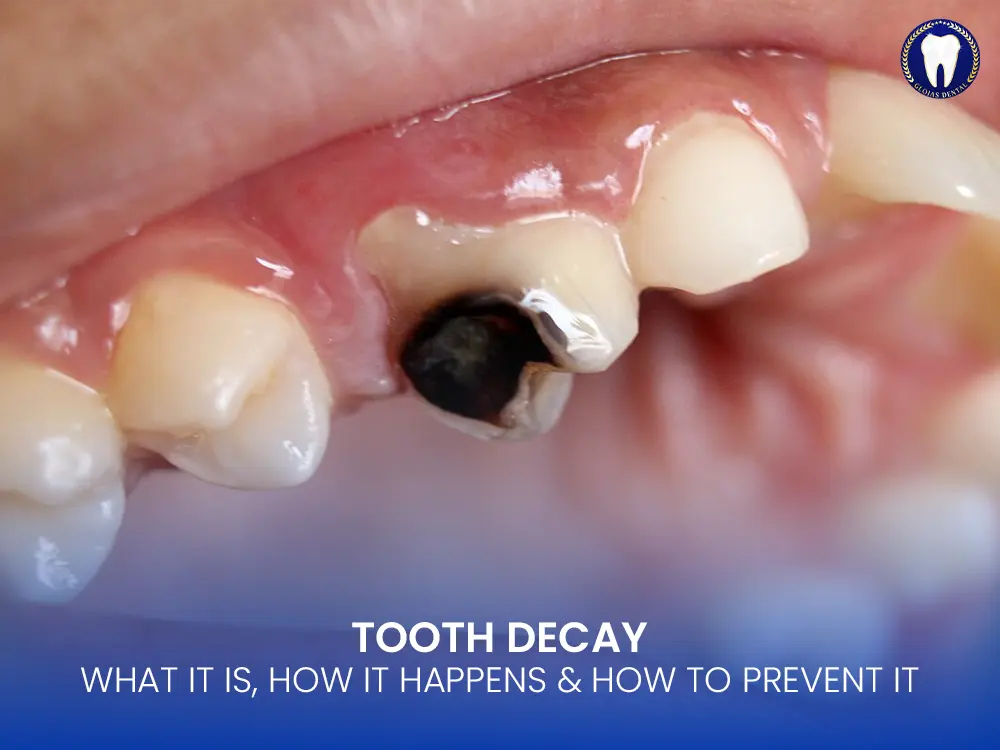
Tooth decay is the progressive destruction of the tooth surface, starting with the outer enamel layer and potentially reaching the dentin and pulp. If left untreated, it can lead to:
Cavities (holes in the teeth)
Tooth pain or sensitivity
Infection and abscess
Tooth loss in advanced cases
Common Causes of Tooth Decay
Poor oral hygiene (not brushing or flossing)
Frequent consumption of sugary or acidic foods
Dry mouth (reduced saliva leads to more bacterial activity)
Lack of fluoride
Irregular dental visits
Bacteria in dental plaque feed on sugars and produce acids, which weaken and break down the tooth structure over time.
Signs and Symptoms of Tooth Decay
Early-stage decay often has no symptoms, which is why routine checkups are important. As it progresses, symptoms may include:
White or brown spots on the tooth
Tooth sensitivity to cold or sweets
Pain when biting or chewing
Visible holes or pits in the tooth
Bad breath or unpleasant taste in the mouth
Treatment Options for Tooth Decay
Depending on the stage, treatment may include:
| Stage | Treatment |
|---|---|
| Early demineralization | Fluoride application |
| Small cavities | Tooth-colored fillings |
| Deep decay | Root canal treatment |
| Extensive damage | Crown or extraction |
Prevention Tips for Tooth Decay
Brush teeth twice daily with fluoride toothpaste
Floss once daily to remove plaque between teeth
Limit sugary drinks and snacks
Drink plenty of water, especially after meals
Visit your dentist every 6 months for scaling and polishing cleanings and checkups
Consider dental sealants for added protection
5 Frequently Asked Questions (FAQs)
1. Can tooth decay be reversed?
Yes—if caught early during the demineralization stage, fluoride treatments and good oral hygiene can reverse decay before a cavity forms.
2. How do I know if I have a cavity?
Signs include tooth pain, sensitivity, or visible pits. However, cavities may be painless early on—dental X-rays can confirm them.
3. Does tooth decay always cause pain?
No. Early decay is usually painless. Pain only occurs when decay reaches the dentin or pulp.
4. Is tooth decay contagious?
Indirectly, yes. The bacteria that cause tooth decay (like Streptococcus mutans) can be transmitted through saliva.
5. What’s the best toothpaste for preventing cavities?
Use a fluoride-containing toothpaste, ideally with 1000–1500 ppm fluoride. Your dentist may recommend prescription-strength if you’re at high risk.